IoT Automation for Coffee and Cocoa Farms in Colombia
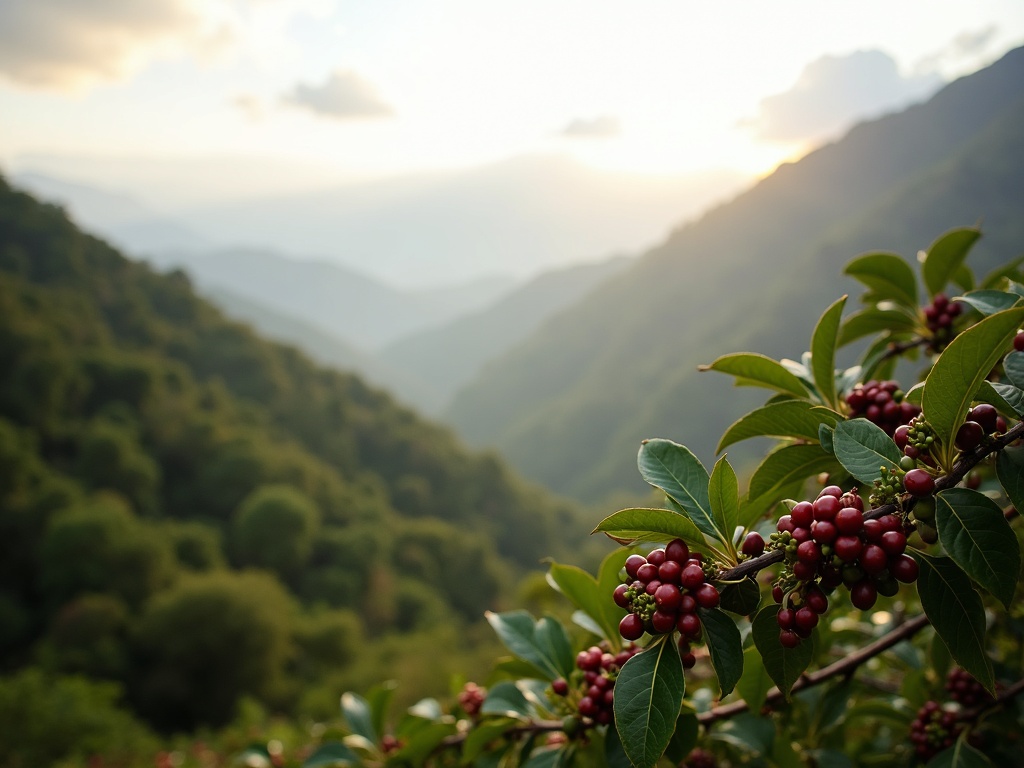
An Antioquia coffee and cocoa operation replaced 6 months of data gaps with a custom FastAPI stack on a Synology NAS that tracks 8 hectares of coffee across 4 altitudes and 3 hectares of cocoa fermentation using Raspberry Pi MQTT sensors for under $1800 hardware cost and $0 monthly.
Colombia produced a record 14.8 million bags of coffee in the 2024/25 cycle per USDA FAS, but production is projected to decline roughly 5% in 2025/26 due to excessive rainfall damaging crops during critical drying stages. The country is also the world's tenth-largest cocoa producer, with small farms across Santander, Huila, and Antioquia drying beans under open sun on concrete patios and raised beds. In both industries, the same problem destroys value at the post-harvest stage: rain hits the drying crop when nobody is watching.
The solution already exists in urban contexts, motorized retractable covers controlled by IoT rain sensors and weather prediction. The same technology that closes a restaurant's terrace roof before a storm can close a motorized tarp over a coffee drying patio or a cocoa drying bed. The question isn't whether the technology works. It's whether it can reach farms where only 28.8% of the population has internet access.
The Drying Problem: Where Quality Dies
Coffee processing in Colombia follows a wet method. After harvesting, cherries are pulped, fermented, and washed to remove mucilage. The resulting parchment coffee is then spread on drying patios, large concrete or brick surfaces exposed to direct sunlight. On sunny days, workers rake the beans every 45 minutes to ensure even drying. The target is to bring moisture content from around 50-55% down to 10-12%, which takes 8 to 15 days depending on weather conditions.
The critical vulnerability is rain. When it rains during drying, workers must scramble to cover the beans or shovel them under shelter. If beans sit in rain for even 30 minutes, they absorb moisture unevenly, leading to inconsistent drying that causes fermentation defects, mold, and off-flavors. A single heavy downpour on an uncovered patio can downgrade coffee from specialty grade (which sells at a premium of $0.50-$2.00 per pound above the C-price) to commercial grade, slashing the farmer's income on that batch by 30-50%.
Cocoa has an even more demanding drying process. After fermentation, which takes 3 to 7 days in wooden boxes where microbial activity develops the flavor precursors, beans are spread on drying beds or patios for 5 to 10 days of sun drying. Moisture content must drop from approximately 60% down to 7% for safe storage. Rain during cocoa drying is worse than rain during coffee drying because cocoa's higher fat content makes it more susceptible to mold and fungal pathogens. Farmers in Santander manually pull beans under shelter during storms, but rain at night or during lunch means unprotected exposure.
In both crops, the labor cost of constant sky-watching is significant. Someone must be near the drying patio at all times during daylight hours, ready to cover or move beans within minutes. On many small farms, this means the farmer personally stands watch, unable to do other productive work during the 1-3 weeks of active drying.
How IoT Automation Solves It
The system is conceptually simple: a rain sensor, a weather prediction module, a motor controller, and a retractable cover over the drying surface. When rain is detected or predicted, the cover closes automatically. When conditions clear, it opens to resume sun drying. No human intervention required.
The technical implementation mirrors what SyncSita already does for residential and commercial roofs. An ESP32 microcontroller reads data from an onboard rain sensor and connects to weather APIs for 30-minute precipitation forecasts. When either trigger fires, physical rain detection or predicted rain, the controller activates a relay that drives a motorized system to extend the cover.
Detection
Rain sensor triggers in seconds. Weather API predicts rain 30 minutes out. Both work independently for layered protection.
Action
Motorized cover extends over drying patio or bed within 60 seconds. Retracts automatically when conditions clear.
Monitoring
Dashboard shows cover position, humidity, temperature. WhatsApp alerts notify the farmer of every open/close event.
The physical cover can be a simple motorized tarp on a rail system, a retractable polycarbonate panel, or a commercial greenhouse-style roll-up curtain. The IoT system is motor-agnostic, it sends a close or open signal to whatever physical mechanism the farmer installs. The cost of the automation controller is a small fraction of the total installation, with the motorized cover structure being the main investment.
Coffee-Specific Benefits
For coffee specifically, automated covers address several pain points beyond basic rain protection.
Overnight protection. Many Colombian coffee regions receive afternoon and evening rain. Workers leave at sundown, and beans left uncovered until morning are at the mercy of whatever weather rolls in. An automated system closes the cover at the first sign of moisture, whether it's 2 PM or 2 AM. This alone can prevent the majority of rain damage events, since many storms arrive outside working hours.
Consistent drying. By preventing rain interruption, the drying curve stays smooth and predictable. Stop-start drying caused by repeated rain exposure creates uneven moisture distribution within each bean, which leads to inconsistent roasting and cup defects. Automated protection means drying progresses continuously during sunny periods without setbacks from unexpected showers.
Labor reallocation. The person who spends 8 hours watching the sky can instead work on harvesting, sorting, or farm maintenance. On small farms where the owner is the sole worker, this is transformative, drying season no longer means being chained to the patio. IoT-Agro research published in ScienceDirect has already demonstrated the viability of these monitoring systems for Colombian coffee farms, confirming that sensor-based automation can match or exceed the responsiveness of manual monitoring.
Specialty grade preservation. The specialty coffee market pays significantly above commodity prices, but achieving specialty grade requires consistent quality at every stage. Automated rain protection during drying is one of the highest-ROI investments a farmer can make toward maintaining that premium quality designation across their entire harvest.
Cocoa-Specific Benefits
Cocoa drying has its own set of challenges where automation provides outsized value.
Longer drying windows. Cocoa needs 5 to 10 days of sun drying compared to coffee's 8 to 15. But cocoa is more sensitive to moisture reabsorption. Each rain event during cocoa drying can add 1-2 days to the total drying time as the beans reabsorb water. Automated covers keep the drying timeline predictable and prevent the cascading delays that come from repeated rain exposure.
Mold prevention. Mold is the primary quality risk in cocoa drying. Wet beans in warm conditions create ideal fungal growth environments. Even short rain exposure followed by humidity trapping under a manually applied tarp can trigger aflatoxin-producing molds. An automated system that closes before rain arrives and opens immediately when conditions clear minimizes the time beans spend in high-humidity conditions.
Fermentation protection. While fermentation itself happens in covered boxes, many farms move beans between fermentation and drying areas on open surfaces. An automated cover over the transition area protects beans during this vulnerable transfer stage as well.
Starlink and Connectivity for Remote Farms
The biggest barrier to IoT agriculture in Colombia isn't the technology itself, it's connectivity. Only 28.8% of rural Colombia has internet access. Most coffee and cocoa farms are in mountainous or jungle regions where cellular coverage is unreliable or nonexistent. Without internet, the weather prediction layer of the automation system can't function.
Starlink has changed this equation. Available in Colombia since 2023 at approximately 800,000 COP (around $200 USD) for the hardware kit plus a monthly subscription, Starlink provides broadband internet anywhere with a clear view of the sky. For a coffee farm that sells 50-100 bags of specialty coffee per year, the annual Starlink cost is less than the value lost from a single rain-damaged batch.
Even without Starlink, the system provides value. The local rain sensor and motor control work completely offline, no internet required for the core protection function. The sensor detects rain, the relay fires, the cover closes. Weather prediction and remote monitoring are cloud features that enhance the system, but the fundamental rain protection works on pure hardware with zero connectivity. A farmer with no internet still gets automatic cover closure the moment rain starts falling.
For cooperatives and larger farms, a single Starlink connection can serve multiple drying patios across the property. The ESP32 controllers connect to the farm's local Wi-Fi network, which routes through Starlink for cloud features. One connectivity investment covers the entire operation.
Real-World Implementation
Deploying this on a Colombian coffee or cocoa farm requires adapting the residential automation approach for agricultural scale and conditions.
Cover design. Farm drying patios are larger than residential terraces, typically 20 to 100 square meters. The cover system needs to handle this scale with motors sized for the load. Commercial greenhouse retractable roof systems are a proven solution, with single motors covering spans of 10+ meters. For smaller patios, a simpler rail-mounted tarp system with a geared motor provides adequate protection at lower cost.
Power. Many remote farms have unreliable grid electricity. The ESP32 controller draws minimal power and can run on a small solar panel with battery backup. The motor itself needs more power, but it only runs for 60-90 seconds per event. A 12V battery system charged by a 100W solar panel is sufficient for most installations, making the entire system grid-independent.
Durability. Farm environments are harsher than urban rooftops. The electronics need IP65 or better weatherproofing. The rain sensor must handle dust, insects, and UV exposure over years of outdoor deployment. Industrial-grade components add cost but ensure reliability across multiple harvest seasons.
Cost structure. The IoT controller itself is the cheapest component, an ESP32 with relay, rain sensor, and enclosure costs under $50 USD. The motorized cover structure is the major expense, ranging from $500-$2,000 USD depending on patio size and cover material. For context, a single batch of rain-damaged specialty coffee can represent $1,000-$5,000 in lost premium. The system pays for itself within one rainy season.
Colombian coffee and cocoa farmers lose significant income every year because rain hits drying beans when nobody is watching. The same IoT technology that protects urban terraces, rain sensors, weather prediction, and motorized covers, can automate retractable covers over drying patios and beds. The system works offline for core protection, scales from small family farms to cooperative operations, and pays for itself by preventing a single rain-damage event. With Starlink making connectivity available even in remote growing regions, the last barrier to smart agriculture in Colombia's coffee and cocoa belt is disappearing. The question for farmers isn't whether to automate drying protection, it's how many harvests they're willing to lose before they do.
