Home Security Automation in Colombia: How IoT Protects Luxury Properties in the Eje Cafetero
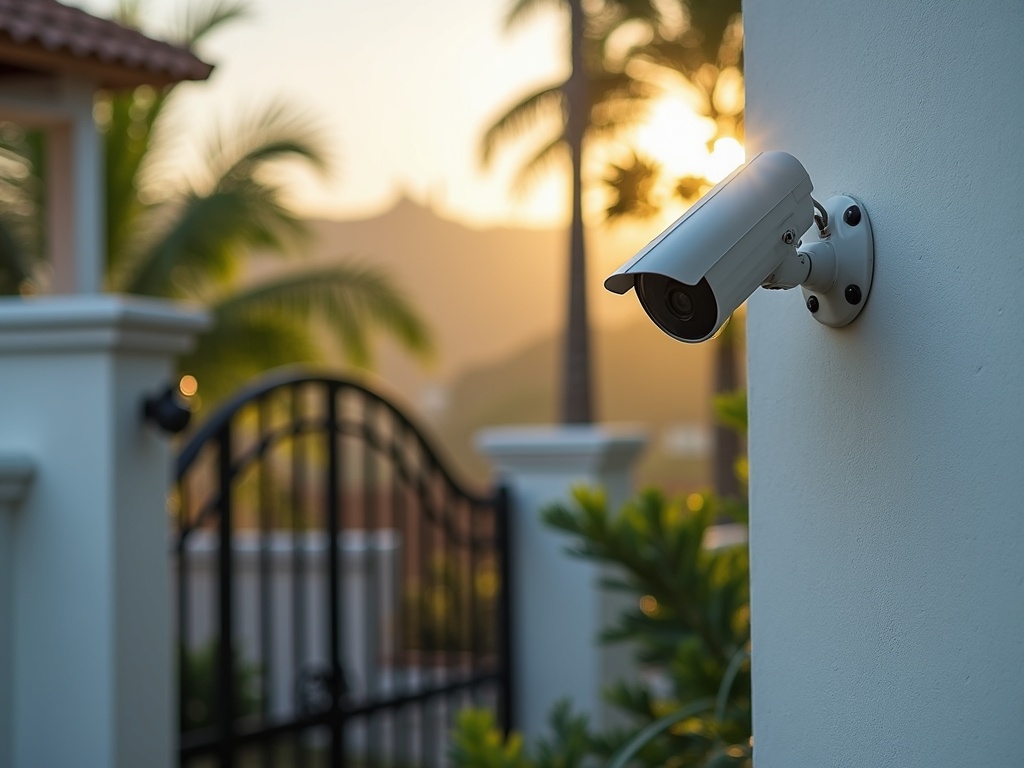
$1500 hardware cost built my Medellin home security system using a Synology NAS and six Reolink PoE cameras with Frigate NVR. I replaced an $80 monthly monitoring contract with this setup. It features AI person detection and Telegram alerts for zero false alarms. Motion sensors on doors and windows trigger immediate notifications without recurring fees.
In early 2025, a group of criminals posed as judicial officials. They entered the Malabar condominium in Cerritos, Pereira. They walked out with 800 million Colombian pesos. The criminals wore uniforms and carried fake credentials. They bypassed every layer of human security the condominium had. The Policía Nacional investigated how the group defeated the access controls. The answer was uncomfortably simple. They exploited the fact that security guards make judgment calls. Judgment calls can be fooled.
This was not an isolated incident. Cerritos is a prestigious rural area east of Pereira. It is known for luxury fincas and gated condominiums. The area has seen a steady increase in targeted property crimes. Criminals are adapting. They study access patterns. They impersonate police and government officials. They exploit the gap between the security residents think they have and the security they actually have.
The Colombian National Police responded to the broader trend. They reinforced rural security through Plan Cosecha 2025. This plan targets coffee-producing regions in the Eje Cafetero. But policing alone cannot cover the vast distances between rural luxury properties. Homeowners need systems that work 24 hours a day. They need systems that do not get tired. They need systems that do not get fooled by fake credentials. They need systems that alert them the instant something is wrong.
That is where IoT home security automation comes in.
Why Traditional Security Fails
Traditional security in Colombian residential properties relies on a predictable stack. It includes perimeter walls, electric fencing, and security guards at the gate. It may also include a CCTV system. That system records to a local DVR. Nobody checks it until after something happens.
Each of these layers has a critical weakness. Walls and fences are passive. They slow intruders down but do not alert anyone. Security guards are human. They can be deceived, bribed, or distracted. They can simply be absent during a shift change. CCTV is retrospective. It helps police investigate after the crime. It does not prevent the crime. It does not alert the homeowner in real time.
The Malabar robbery demonstrated the guard vulnerability perfectly. Someone arrives in a uniform with an official-looking document. The guard faces a social pressure problem. Refusing entry to what appears to be a legitimate authority carries consequences. So the guard lets them in. The criminals knew this. They exploited the social dynamic, not the physical security.
An IoT sensor network has no social dynamics to exploit. It does not care about uniforms or credentials. It detects physical events. A gate opens. A door moves. Motion occurs in a restricted area. It reports these events instantly. There is no judgment call to manipulate.
IoT Sensor Networks for Property Security
A modern IoT security installation uses small, wireless sensors. They are placed at every entry point and critical zone on the property. Each sensor communicates with a central hub. This hub is typically an ESP32 or similar microcontroller. It processes events locally and relays them to a cloud platform.
The sensor types that matter most for Colombian rural properties:
- Magnetic contact sensors on gates, doors, and windows. These detect open and close events instantly. They are nearly impossible to defeat without physically destroying them.
- PIR motion sensors covering driveways, gardens, and perimeter zones. These detect heat signatures from human movement. They trigger alerts for unexpected activity.
- Vibration sensors on walls and fences. These detect climbing or cutting attempts before the intruder actually breaches the perimeter.
- Water and environmental sensors that serve double duty. They detect flooding or unusual conditions that might indicate tampering with infrastructure.
The key advantage of IoT sensors over traditional alarm systems is granularity. You get specific information instead of a single "alarm on" or "alarm off" state. You know which gate opened. You know which zone detected motion. You know which door was forced. This context transforms a generic alarm into actionable intelligence.
Gate Sensors
Instant open and close detection on every entry point. Know exactly which gate was accessed and when. Timestamps are logged to the cloud.
Perimeter Motion
PIR and vibration sensors cover walls, fences, and approach paths. They detect intrusion attempts before they reach the property.
WhatsApp Alerts
Real-time notifications arrive on your phone within seconds. No app to install. No monitoring contract. Just instant awareness.
Automated Gates and Access Control
The gate is the most critical security point for any property. It is also the point most vulnerable to social engineering. Automating gate control removes the human decision-maker from the process.
An IoT-automated gate system works on a whitelist model. The gate opens only with authorized access methods. These include RFID tags, smartphone authentication, scheduled time windows, or remote unlock from the homeowner. There is no guard to convince. There is no intercom where someone can claim to be from a government agency. The gate either recognizes the credential or it stays closed.
This is transformative for properties in areas like Cerritos. Impersonation attacks are a documented tactic there. The criminals who robbed Malabar would have been stopped at the first gate. No amount of fake paperwork overrides a digital access list.
The system also logs every access event with timestamps. This creates an audit trail that traditional guard-based systems cannot match. If you want to know who entered your property and when, the data is in the dashboard. It is not in a guard's memory or a paper logbook that can be altered.
WhatsApp Alerts and Remote Monitoring
The most powerful feature of an IoT security system is not the sensors themselves. It is the notification layer. Knowing that your front gate opened at 2:47 AM changes your response capability entirely. You know within seconds of it happening.
WhatsApp was chosen as the primary notification channel for a practical reason. In Colombia, everyone has it. There is no app to download. There is no account to create. There are no push notification permissions to configure. The alert arrives as a regular WhatsApp message. The homeowner sees it immediately on whatever device they are using.
A typical alert contains the sensor name, the event type, and the timestamp. More advanced setups include a camera snapshot triggered by the same event. This gives you a visual of what caused the alert. You can respond to the message with commands. You can arm the system, trigger a siren, lock all gates, or acknowledge the event as expected.
Some homeowners travel frequently or own multiple properties across the Eje Cafetero. For them, remote monitoring through a cloud dashboard at SyncSita's platform provides a real-time overview. It shows every sensor on every property. You can be in Bogota, Miami, or anywhere in the world. You will know exactly what is happening at your finca in Cerritos.
Rural Property Protection in the Eje Cafetero
Rural properties present unique security challenges. Urban alarm systems were not designed for them. Distances are greater. Response times from police are longer. Properties often sit unoccupied for days or weeks at a time. The Eje Cafetero spans Risaralda, Caldas, and Quindio. It has thousands of luxury fincas that fit this profile.
Plan Cosecha 2025 is a Colombian police initiative. It aims to reinforce security in coffee-growing regions. It acknowledges the challenge but can only provide periodic patrols across vast rural areas. The time between patrols is the vulnerability window. Criminals know it.
IoT security fills the gap between police patrols. The sensors do not sleep. They do not take breaks. They do not leave the property unmonitored. A rural finca with a properly configured sensor network has the same situational awareness as a staffed security operation. It does this at a fraction of the ongoing cost.
Solar-powered sensor nodes and cellular connectivity (4G/LTE) mean the system works even on properties without reliable electricity or broadband internet. The sensors operate for months on battery power. The cellular gateway sends alerts over the mobile network. There is no wiring. There is no ISP contract. There are no infrastructure requirements beyond what is already available in rural Risaralda.
Practical Implementation
Getting started with IoT security does not require replacing your existing systems. The most effective approach is layering IoT sensors on top of what you already have.
Phase 1: Gate and entry monitoring. Install magnetic contact sensors on every gate and main door. Connect them to a central hub with WhatsApp notification capability. This alone gives you real-time awareness of all access events. It is the single most valuable security upgrade you can make. The total cost is minimal compared to even one month of guard service.
Phase 2: Perimeter sensors. Add PIR motion sensors to driveways, garden paths, and fence lines. Configure zone-based alerts. This tells you not just that motion was detected, but where on the property it occurred. Combine this with existing CCTV to trigger camera recording on motion events.
Phase 3: Automated access control. Replace or supplement manual gate controls with IoT-managed access. Implement RFID or smartphone-based authentication. Create time-based rules for service personnel (gardener access only on Tuesdays, for example). Every access event is logged and reported.
Phase 4: Integration and intelligence. Connect the security sensors to a broader automation platform that includes environmental monitoring, energy management, and remote property control. The same infrastructure that monitors security can also monitor water levels, power status, and temperature. This turns isolated sensors into a complete property management system.
The SyncSita platform was originally designed for automated roof control with rain sensors and weather prediction. It extends naturally into security applications. The same ESP32 hardware that controls a motorized roof can monitor gate sensors, detect motion, and send WhatsApp alerts. The cloud dashboard at connect.syncsita.com provides the same real-time monitoring and event logging for security events as it does for weather events.
The Malabar robbery in Cerritos proved that human-dependent security can be defeated by criminals who understand social engineering. IoT automation removes the human vulnerability. Sensors do not get fooled by uniforms. Gates do not open for fake credentials. WhatsApp alerts reach your phone in seconds, not hours. For homeowners in the Eje Cafetero, especially those with luxury properties in areas like Cerritos, Pereira, and the surrounding coffee country, IoT security is not a tech luxury. It is the layer that makes every other security investment actually work. The technology is available today. It runs on existing cellular networks. It costs less than a single month of private guard service to install.
