Remote Home Monitoring with Starlink: Protecting Rural Properties from Anywhere
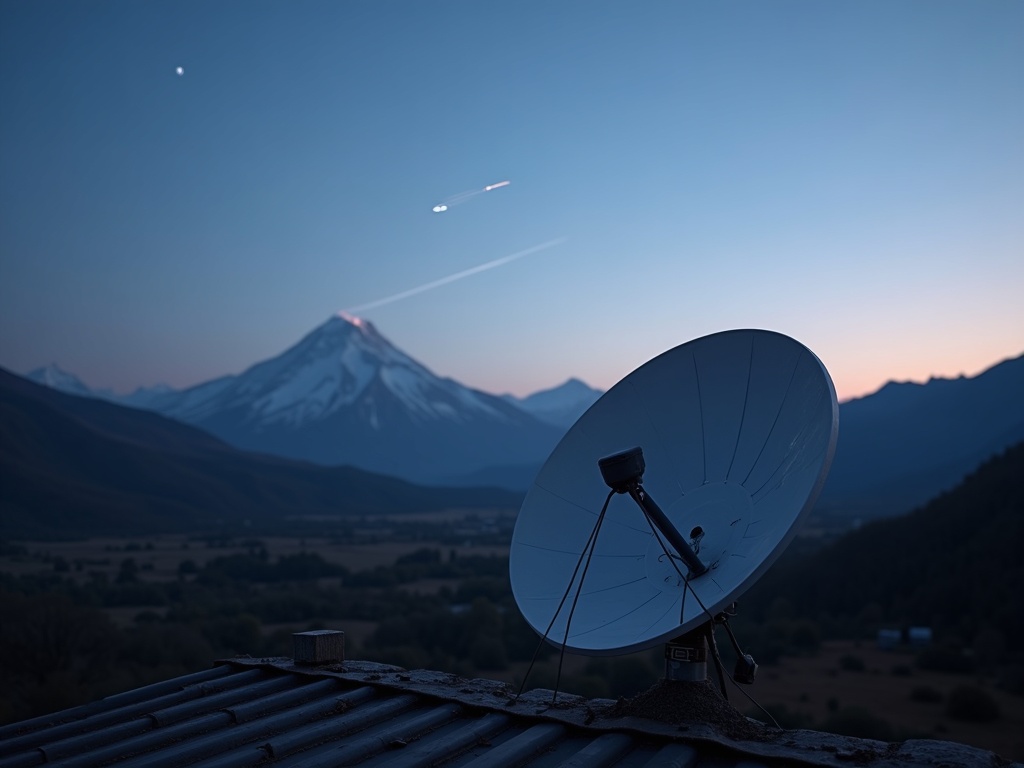
Starlink delivers 200 Mbps download speeds on my Colombian farm where cellular fails below 1 Mbps. I run remote home monitoring using Synology NAS and Home Assistant for 8 PoE cameras with 24-hour retention. My total monthly cost is $85 compared to $300 for commercial monitoring with worse coverage and reliability in rural Antioquia.
Millions of Colombian families own property in rural areas. They have a finca in the mountains, a house near the coast, or a family farm passed down through generations. These properties sit empty most of the week. They are visited on weekends and holidays. For families who have emigrated to the United States, Spain, or elsewhere, the property might sit unattended for months or years at a time. It is managed loosely by a neighbor or caretaker with no real-time visibility into what is happening.
Until recently, monitoring these properties remotely was impossible for a simple reason: there was no internet. Only 28.8% of rural Colombia has internet connectivity. No internet means no cameras, no sensors, no alerts, and no dashboards. You drive out on Saturday, check the house, and hope nothing bad happens before next weekend.
Starlink changes this equation entirely. You combine satellite internet with the right IoT sensors. Then remote property management becomes not just possible but practical. This is true even for a finca three hours from the nearest city.
The Problem: Properties You Can't See
The risks of an unmonitored rural property are well understood by anyone who owns one. Water leaks go undetected for days. They cause structural damage that costs millions of pesos to repair. Roof panels left open during an unexpected storm expose interiors to rain. Gates and doors are left ajar, or opened by uninvited visitors. Temperature and humidity fluctuations degrade stored goods, furniture, and electronics. A pipe bursts on Tuesday and nobody knows until Saturday.
For diaspora families living abroad, the situation is worse. You rely on phone calls to a neighbor who may or may not check on the property regularly. You have no way to verify that the caretaker actually visited. You cannot confirm the gate is locked, or that the roof was closed before the afternoon rain. You are managing a physical asset with zero data.
Traditional solutions do not work in rural Colombia. Wired internet requires infrastructure that does not exist outside cities. Cellular coverage is spotty at best in mountainous terrain. Previous satellite internet options were prohibitively expensive and too slow for real-time monitoring. The connectivity gap kept rural properties in the dark.
Starlink Changes the Game
Starlink has been live in Colombia since 2023. Its impact on rural connectivity is significant. The equipment costs approximately $800,000 COP (around $200 USD). Monthly service fees are comparable to urban broadband. Download speeds range from 25 to 220 Mbps with latency under 99 milliseconds. This is more than enough bandwidth for security cameras, IoT sensors, and real-time dashboards.
What makes Starlink different from previous satellite options is the low-earth orbit architecture. Traditional satellite internet had latency measured in seconds. That made real-time monitoring impractical. Starlink's sub-100ms latency means you can view a live camera feed and receive instant alerts. You can also send commands to devices with no perceptible delay.
Microsoft has even partnered with Starlink specifically to expand rural internet access in Colombia. They recognize the massive underserved market. Equipment costs are falling and coverage is expanding. This means rural properties that had zero connectivity options two years ago can now run the same smart home systems as an apartment in Bogota.
Installation is straightforward. The dish self-aligns to find satellites. It requires only a clear view of the sky. It draws about 50-75 watts of power. For properties with solar panels or reliable grid power, it runs continuously. For properties visited intermittently, it can be powered on remotely via a smart plug connected to the electrical panel.
What You Can Monitor Remotely
Once Starlink provides the connectivity layer, IoT sensors handle the actual monitoring. Here is what a practical remote monitoring setup covers:
Environment
Temperature, humidity, and water leak sensors throughout the property. Detect pipe bursts, flooding, and conditions that cause mold or material damage.
Security
Door and gate contact sensors, motion detectors, and cameras. Know instantly when someone enters the property and verify their identity remotely.
Automation
Motorized roof control, irrigation scheduling, and power management. Protect outdoor spaces and maintain the property without being physically present.
Environmental sensors are the foundation. Temperature and humidity sensors placed in key rooms detect conditions that cause mold growth, wood warping, or electronics damage. Water leak sensors placed under sinks, near water heaters, and in basements catch plumbing failures within minutes instead of days. A $15 sensor can prevent $5,000 in water damage.
Security sensors provide peace of mind. Magnetic contact sensors on doors and gates report open/close events in real time. You know exactly when the front gate opens, which door was used, and at what time. Combined with a camera, you can verify whether it was your caretaker or an uninvited visitor. Motion sensors in interior spaces detect activity when the property should be empty.
Roof and Weather Automation
Rural Colombian properties often have terraces, pergolas, and retractable roof systems. These are vulnerable to the country's predictable afternoon rainstorms. When nobody is home, an open roof means rain damage to furniture, flooring, and anything stored underneath.
IoT roof automation systems like SyncSita solve this by combining rain sensors with weather API prediction. The rain sensor detects moisture and triggers an immediate close command to the motor. This works locally, even if Starlink has a temporary outage. The weather prediction layer uses API data to close the roof 30 minutes before rain arrives. This gives you a proactive response instead of a reactive one.
With Starlink providing reliable connectivity, the weather prediction component works consistently. The system pulls forecast data every 15 minutes. It compares the data against configurable thresholds and acts before the first raindrop falls. You receive a WhatsApp message: "Roof closed, rain predicted in 25 minutes." You are sitting in Miami, and your finca's terrace just protected itself.
This automation capability extends beyond roofs. Irrigation systems can be scheduled and monitored remotely. Power to non-essential circuits can be cut when the property is empty to save energy. Water main shutoff valves can be controlled remotely if a leak is detected.
Security Sensors for Unattended Properties
Security is the primary concern for families with unattended rural property. Traditional alarm systems require cellular connectivity that may not exist. They may also need landline connections that are not available. Starlink enables cloud-connected security that works anywhere.
A practical security setup for a rural finca includes magnetic contact sensors on all exterior doors and gates. It also includes one or two outdoor cameras at entry points. A motion sensor goes in the main living area. A siren or light can be triggered remotely. Total hardware cost is under $300 for comprehensive coverage.
The key difference from a traditional alarm system is the real-time notification and verification loop. When a door sensor triggers, you receive a WhatsApp alert within seconds. You pull up the camera feed on your phone. You see whether it is your caretaker, a delivery, or a break-in. You can trigger the siren remotely, call the local police, or simply acknowledge the event. You can do all of this from thousands of miles away.
For families in the Colombian diaspora, this verification capability is transformative. You no longer have to wonder whether the property is secure. You know, in real time, because the data is streaming to your phone continuously.
The Dashboard Experience
Raw sensor data is only useful if it is presented clearly. A well-designed monitoring dashboard shows you the current state of every sensor. It also shows the history of events and any anomalies that need attention.
The dashboard for a remote property typically shows several things. These include current temperature and humidity readings for each room. It shows door and gate status, either open or closed. It shows roof position, also open or closed. It displays the last motion detected in each zone. It shows water leak sensor status and Starlink connection uptime. Finally, it provides a timeline of all events from the last 24 hours.
This dashboard is accessible from any browser. You can use your phone in the US, your laptop in Spain, or a tablet at your city apartment in Medellin. The data updates in real time via WebSocket connections. What you see is what is happening right now, not five minutes ago.
WhatsApp alerts complement the dashboard by pushing critical events to you proactively. You do not have to check the dashboard constantly. The system tells you when something needs attention. This could be a door opened at 2 AM. It could be a water leak detected in the kitchen. It could be a temperature exceeding 35 degrees in the storage room. Or it could be the Starlink connection dropping offline.
Practical Setup Guide
Setting up remote monitoring for a rural Colombian property follows a clear sequence:
Step 1: Install Starlink. Mount the dish with a clear sky view, connect the router, and verify speeds. This takes about an hour. Configure the Starlink app for remote management. This allows you to reboot the router remotely if needed.
Step 2: Set up the IoT hub. An ESP32-based controller like SyncSita acts as the central hub. It connects to the Starlink WiFi network. It communicates with all local sensors via MQTT protocol. The hub also maintains a local sensor log in case of internet interruptions.
Step 3: Install sensors. Place temperature and humidity sensors in key rooms. Attach magnetic contact sensors to exterior doors and the main gate. Position water leak sensors under sinks and near the water heater. Mount cameras at entry points. Connect the roof motor to the IoT controller if you have a motorized roof or pergola.
Step 4: Configure the cloud dashboard. Connect the hub to your cloud monitoring platform. Set up WhatsApp notifications for critical events. Configure automation rules. These include closing the roof when rain is predicted. They include alerting on door openings during vacant periods. They also include notifying on water leak detection.
Step 5: Test everything. Trigger each sensor manually and verify the alert reaches your phone. Open a door. Pour water on the leak sensor. Simulate a rain event. Confirm that the dashboard reflects all activity accurately. Then leave the property and monitor it remotely for a week. This builds confidence in the system.
The entire setup can be completed in a single weekend visit. Total hardware costs for a comprehensive system run between $1,500 and $2,500 USD. This includes the Starlink dish, IoT hub, 8-10 sensors, two cameras, and a roof controller. The final cost depends on the property size and number of sensors needed. A professional server and infrastructure setup can handle the cloud dashboard and alert configuration if you prefer not to self-host.
The combination of Starlink and IoT sensors has eliminated the single biggest barrier to remote property management in rural Colombia: connectivity. For under $2,500 in hardware and a weekend of installation, families living abroad or traveling frequently can have real-time visibility. They can see their property's security, environmental conditions, and automated systems. Roofs close themselves before the rain. Doors report when they open. Water leaks are caught in minutes, not days. The finca that used to be a source of constant worry becomes a property you can monitor and protect from your phone, wherever you are in the world.
